
Daring to be vulnerable - Brene Brown
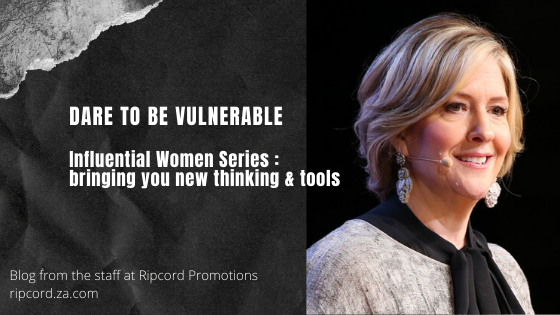
This is the first post in our 2020 series on influential female thinkers, and we are focusing on the work of Brene Brown, a research professor at the University of Houston. Brene has spent the past two decades studying exactly the kind of topics that we tend to avoid at work: courage, vulnerability, authenticity, shame and empathy. She is widely published, and you may be familiar with one of her 5 New York Times bestsellers: The Gifts of Imperfection, Daring Greatly, Rising Strong, Braving the Wilderness and Dare to Lead (the last is a culmination of a seven year study on the future of leadership). Of course, she is also widely known for her appearances on TED. The 2012 TED talk “Listening to Shame” has been viewed over 13 million times. Her original 2010 Talk “The Power of Vulnerability” has racked up an incredible 45.5 million views! Clearly Brene is researching and presenting on issues that are striking a chord for many people.
It would be a supremely tall order to convey all of Brene’s work in one post written for online consumption (typically more succinct to match digital age attention spans that are shrinking all the time). In this post we will focus on a few insights rounded up from her 2019 endeavours as a researcher / storyteller on Netflix’s “The Call to Courage”. At the end of this post we will provide more direction on where to dig deeper into her powerful insights and work. This format of ‘digging deeper’ at the end of each post is a feature we will offer with every post in the series. We hope you like it, and that you will engage with our series across the course of 2020.
Brene Brown believes that you have to walk through vulnerability to get to courage. Vulnerability is not about the sheer amount of information we disclose. In fact, over-sharing can be distinctly unhelpful within working contexts, it risks burdening others with information and challenges they likely do not or should not have license to solve. Examples of real vulnerability are when you apply for a job that you are not sure that you will get, when you tell someone how you really experienced something they said or did, or when you take on a new task with little or no direction. It is the feeling that comes from uncertainty, risk or emotional exposure. You have to place yourself in these situations, to be vulnerable, to get to courage, which Brene defines as sharing your truth, being authentic, being you. Courage requires of us that we are open to and accept our own failures, and this is far from easy. But the payoff when you choose courage is handsome. Vulnerability is at the core of everything good. And by good Brene means connection, fulfillment, support and joy, deeply human ‘good’. You cannot reach them if you cannot let yourself ‘be seen’. They all require a measure of investment, risk, uncertainty and emotional exposure.
The challenge for leaders is their fear of being vulnerable as armour is removed. (We like Brene’s definition of a leader as anyone who takes responsibility for finding the potential in people and processes, and who has the courage to develop that potential). Without armour, we feel exposed and may experience shame. The remedy for shame, empathy, does not come from connecting to an experience, but rather from connecting to the emotions that underpin an experience. Our trick as leaders is to find and own our story, and write the ending of it. Deny the story, and the story will eventually own you.
Viewing vulnerability as a weakness could turn out to be a big weakness. Show up, be brave and be courageous, advocates Brene. Her life’s work has been dedicated to assisting others to do just this, through making her research accessible, writing widely and often, and offering a range of tools and programmes to change the way we work and live our lives.
Vulnerability is hard and scary, and it feels dangerous. But it’s not as hard and scary as getting to the end of our lives and having to ask ourselves, “What if I would’ve shown up?” – Brene Brown
3 practical takeaways
Here are 3 calls to action for growing your daring leader:
1. Be curious and open when offered feedback The next time someone gives you constructive feedback, set a new tone and explore what he or she is saying without becoming defensive. What can you learn? Normalise the giving of constructive feedback by making it ok for others to speak up. We want to know more about our potential flaws and avoid shutting down insights that help us to level up.
2. “Clear is kind, unclear is unkind” Clarify what ‘done’ looks like, in terms of format, deadline, and also fit with overall goals. The ‘why’ behind what we do is important, as it motivates and holds others accountable for their actions. If you are not clear, always ask, even if it makes you feel vulnerable!
3. Connect with your team Acknowledge contributions and unique impact. Knowing how a person can make their best impact directs how we can empower them to do so, and builds a culture where people feel like they belong. Being seen and heard is essential for productive and innovative work, and productive and innovative work is essential for future success.
One step further
Take it one step further. Explore more of Brene’s work below.
TED Talk “The Power of Vulnerability” 2010 https://www.ted.com/talks/brene_brown_the_power_of_vulnerability
TED Talk “Listening to Shame” 2012 https://www.ted.com/talks/brene_brown_listening_to_shame
Brene’s website: https://brenebrown.com/
Dare to lead (resources for leaders) https://daretolead.brenebrown.com/
Courage catalysts (shining a light on Dare to Lead Certified Facilitators in non-profits, education and under-resourced communities, making the world a better and braver place) https://brenebrown.com/courage-catalysts/
A Dare to Lead book summary: https://paulminors.com/blog/dare-to-lead-by-brene-brown-book-summary-pdf/